Tesla Model 3 owners throughout the Triangle region are discovering an expensive truth about electric vehicle breakdowns. Standard towing methods that work perfectly for gas-powered cars can cause thousands of dollars in damage to electric vehicles. A simple wheel-lift tow that costs $150 can result in drivetrain repairs exceeding $8,000 for Tesla and other EV models.
Electric vehicle towing requires specialized flatbed transport to protect high-voltage battery systems, regenerative braking components, and complex electrical networks that differ significantly from traditional automobiles. Improper towing methods can void manufacturer warranties, damage expensive battery packs, and create safety hazards during transport.
This guide explains why electric vehicle towing demands professional flatbed services, common mistakes that cause expensive damage, and proper transport procedures for Tesla, BMW i-series, Nissan Leaf, and other electric vehicles in Cary and the Triangle region. When your EV needs emergency transport, Agile Towing Company Cary provides specialized electric vehicle towing services throughout Cary, Raleigh, Apex, Holly Springs, and Morrisville at (919) 276-5900.
Why Electric Vehicle Towing Differs from Traditional Cars
Electric motors and battery systems create unique vulnerabilities during emergency transport that don’t exist with gasoline engines. When EV wheels rotate during towing, regenerative braking systems generate electricity that can damage battery management systems and electronic components not designed to handle reverse electrical flow.
Tesla Model S, Model 3, Model X, and Model Y vehicles contain high-voltage battery packs weighing 1,000 to 1,400 pounds located beneath the passenger compartment. These battery housings require specific lifting points and support methods to prevent structural damage during flatbed loading.
Weight distribution in electric vehicles concentrates mass in different locations compared to traditional cars. Tesla Model X weighs up to 5,531 pounds while BMW i4 weighs 4,650 pounds, creating load requirements that exceed many standard towing equipment specifications.
High-Voltage System Protection Requirements
Charging ports and cables need protection during emergency transport because damage to these components can cost $2,000 to $4,000 for replacement and recalibration. Professional electric vehicle towing includes proper securing methods that prevent movement without stressing charging infrastructure.
Regenerative braking systems in electric vehicles cannot be simply placed in neutral like traditional automatic transmissions. Most EVs require complete shutdown procedures and specific transport modes that only trained technicians understand properly.
Manufacturer warranty requirements specify flatbed transport for most electric vehicle emergency situations. Tesla, BMW, Audi, and Mercedes explicitly void powertrain warranties when improper towing methods damage electrical or drivetrain components.
Common Electric Vehicle Towing Mistakes That Cause Expensive Damage
Dolly towing represents the most dangerous method for electric vehicle transport because it allows rear wheels to rotate while generating unwanted electricity through regenerative systems. This backward electrical flow can damage battery management computers, inverters, and charging systems that cost $5,000 to $15,000 to replace.
Improper lifting points during wheel-lift towing can crack battery housing, damage high-voltage cables, or puncture cooling lines that maintain optimal battery temperatures. Tesla Model Y and Model 3 have specific jacking points that must be used to prevent structural damage during lifting procedures.
Specific Damage Risks by Electric Vehicle Model
Tesla Model S and Model X use air suspension systems that can be damaged when lifted incorrectly or transported with wheels touching the ground. Air suspension repairs typically cost $3,000 to $6,000 per corner when damaged during improper towing.
Nissan Leaf and Chevy Bolt have different weight distributions and electrical architectures that require model-specific knowledge for safe transport. These vehicles use different battery chemistries and cooling systems that affect proper towing procedures.
BMW i3, i4, and iX models include carbon fiber body panels and specialized materials that can crack or separate when subjected to improper lifting forces during emergency towing situations.
Temperature considerations become critical for lithium battery safety during transport because damaged batteries can overheat, smoke, or create toxic fumes. Professional electric vehicle towing includes temperature monitoring and safety protocols for battery emergencies.
Flatbed Towing Requirements for Electric Vehicles
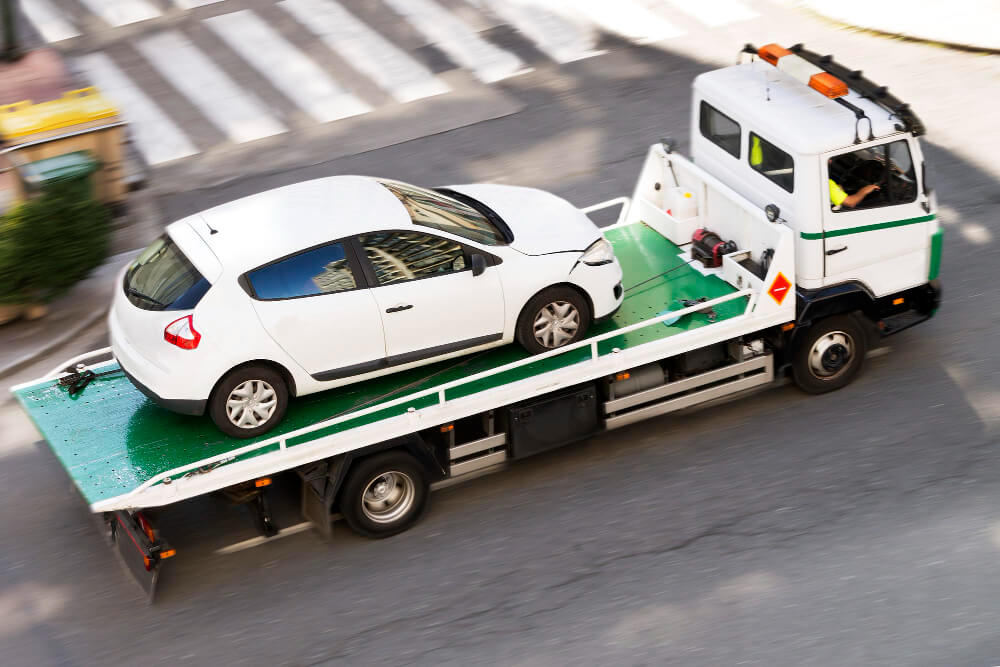
Flatbed transport eliminates drivetrain rotation that causes regenerative braking damage in electric vehicles, highlighting the benefits of flatbed tow truck service for protecting specialized vehicles during emergency transport. Complete vehicle support prevents wheel movement and electrical generation that can harm battery systems and electronic components during emergency transport.
Proper loading procedures protect EV undercarriages and battery housings through correct placement on flatbed surfaces. Professional operators understand Tesla-specific tie-down points and securing methods that prevent movement without damaging charging ports or aerodynamic components.
Weight capacity requirements for electric vehicle flatbed transport exceed standard passenger car specifications. Tesla Model X Plaid weighs 5,531 pounds while loaded, requiring flatbed trucks rated for at least 7,000 pounds to maintain safety margins.
Professional Equipment and Safety Protocols
Battery safety protocols during electric vehicle transport include high-voltage disconnect procedures when damaged vehicles pose electrical hazards. Trained operators can safely isolate electrical systems while protecting emergency responders and transport personnel.
Emergency situations involving accident-damaged electric vehicles require specialized training for dealing with compromised battery packs, exposed high-voltage cables, and potential fire hazards that don’t exist with traditional vehicles.
Professional flatbed equipment includes non-conductive tie-down straps, insulated tools, and emergency response equipment specifically designed for high-voltage automotive systems found in modern electric vehicles.
Communication with EV owners includes proper vehicle preparation, shutdown procedures, and post-transport inspection recommendations to ensure electrical systems remain functional after emergency towing events.
Triangle Area Electric Vehicle Towing Challenges and Solutions
RDU airport presents unique electric vehicle towing challenges because parking garage height restrictions limit flatbed truck access while charging station locations require specialized navigation for emergency vehicle recovery.
Downtown Raleigh parking structures often have clearance restrictions below 7 feet that prevent standard flatbed trucks from accessing broken-down electric vehicles, requiring specialized equipment and recovery techniques.
Local Infrastructure and Response Considerations
I-40 and NC-540 high-speed electric vehicle breakdowns require rapid response with proper traffic control because EVs cannot be quickly moved using traditional towing methods. Flatbed loading takes longer but provides safer outcomes for Triangle area highway emergencies.
Cary and Morrisville neighborhoods with narrow streets and tight driveways present access challenges for flatbed trucks recovering electric vehicles from residential locations, requiring route planning and specialized maneuvering techniques.
Professional response times for electric vehicle emergencies throughout the Triangle region average 45 to 90 minutes depending on location and traffic conditions, compared to 30 to 60 minutes for traditional vehicle recovery.
Coordination with Tesla service centers in Raleigh and Charlotte ensures proper post-transport inspections and repairs when electric vehicles require professional diagnosis after emergency towing events.
Choosing Professional Electric Vehicle Towing Services in Cary
Certification and training requirements for electric vehicle transport include specialized education on high-voltage systems, battery safety, and manufacturer-specific towing procedures that protect expensive EV components during emergency situations.
Insurance coverage for electric vehicle flatbed transport should include protection for vehicles valued up to $150,000 because Tesla Model S Plaid, BMW iX, and Mercedes EQS represent significant financial investments requiring comprehensive protection.
Experience with multiple electric vehicle brands ensures proper handling of Tesla, BMW i-series, Audi e-tron, Genesis Electrified, and luxury EV models that have different requirements for safe emergency transport throughout the Triangle region.
24-hour availability for electric vehicle emergencies provides Triangle area EV owners with immediate response when breakdowns occur during off-hours, weekends, or holidays when dealership assistance becomes unavailable.
Conclusion
Electric vehicle towing requires specialized flatbed transport to protect high-voltage battery systems, prevent drivetrain damage, and maintain manufacturer warranty coverage. Traditional towing methods designed for gasoline vehicles can cause thousands of dollars in damage to Tesla and other electric vehicle models.
Professional electric vehicle towing services understand the unique requirements for safely transporting EVs throughout the Triangle region while protecting these valuable investments from expensive damage. Proper flatbed procedures eliminate risks associated with regenerative braking systems, high-voltage components, and complex electrical networks.
When your electric vehicle needs emergency transport in Cary, Raleigh, Apex, Holly Springs, or surrounding Triangle areas, contact us at Agile Towing Company Cary for specialized EV flatbed towing services. We provide 24-hour electric vehicle emergency response with properly trained technicians and specialized equipment at (919) 276-5900.