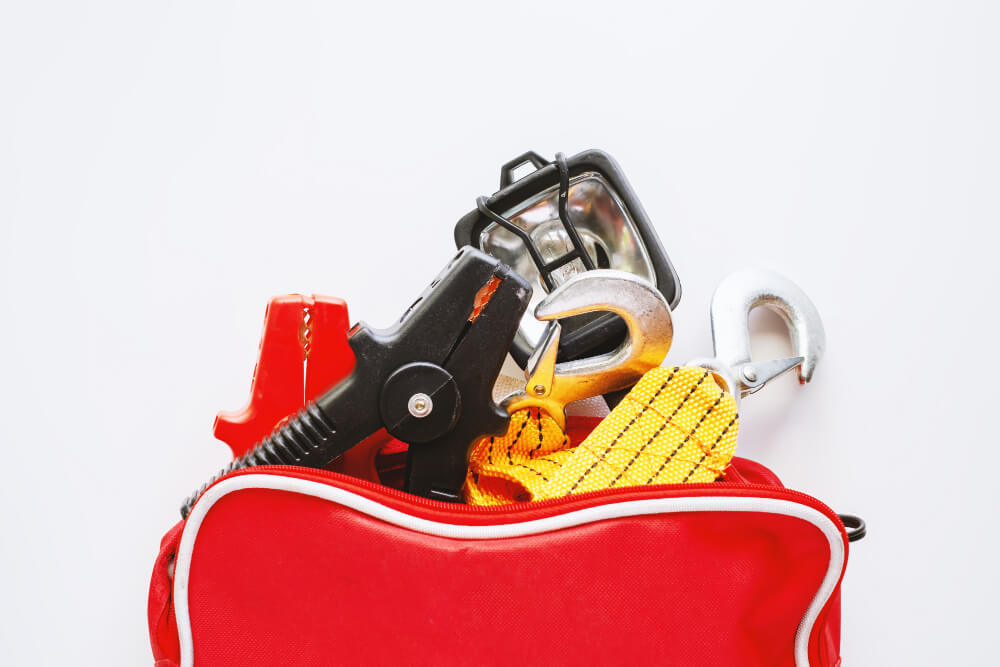
Getting stranded on the side of the road is never convenient, but it happens to drivers regularly. Whether it’s a dead battery, flat tire, or unexpected breakdown, having the right emergency car kit can turn a stressful situation into a manageable inconvenience. At Agile Towing Company, we’ve responded to roadside emergencies in Cary and surrounding areas, and we’ve seen how proper preparation makes a difference. You can reach us at (919) 276-5900 whenever you need roadside assistance, but having these emergency car kit essentials might help you avoid needing professional help altogether.
This guide covers the must-have items for your vehicle emergency kit, from basic safety tools to seasonal considerations that keep you prepared year-round.
Safety and Communication: Your First Priority
When your car breaks down, your immediate concerns should be visibility and communication. These items form the foundation of any effective emergency car kit.
A reliable flashlight with extra batteries is absolutely essential. LED flashlights typically last longer and provide brighter light than traditional bulbs. Keep both a handheld flashlight and a hands-free headlamp if possible. Dead flashlight batteries are common, so store extra batteries in a separate waterproof container.
Reflective triangles or road flares make your vehicle visible to other drivers, especially at night or in poor weather. Many states require these safety devices, and proper placement can help prevent secondary accidents. Generally, place them well behind your vehicle on highways, closer on city streets.
A basic first aid kit handles minor cuts, scrapes, or injuries that might occur during a breakdown. Include bandages, antiseptic wipes, pain relievers, and any personal medications family members might need.
Your phone is your lifeline during emergencies, so pack both a 12-volt car charger and a portable battery pack. Car electrical systems can fail, making the portable option crucial when your alternator isn’t working.
Essential Vehicle Tools Every Driver Needs
Jump Starting Equipment
Dead batteries are one of the most common causes of roadside assistance calls. Jumper cables are the traditional solution, but portable jump starters have become increasingly popular and practical.
When choosing jumper cables, look for 4-gauge or thicker wires that are at least 12 feet long. Thicker cables conduct electricity better, and longer cables give you flexibility when positioning vehicles.
Portable jump starters eliminate the need for another vehicle and often include built-in flashlights, USB charging ports, and air compressors. They’re particularly valuable in remote areas or when other drivers aren’t available to help.
Tire Emergency Solutions
Tire problems are another leading cause of roadside calls. While you can’t fix every tire issue yourself, these tools handle many common situations:
• Tire pressure gauge and portable air compressor – Low tire pressure causes poor handling and can lead to blowouts. A small 12-volt compressor plugs into your car’s power outlet and can reinflate low tires.
• Tire sealant – Emergency tire sealant temporarily fixes small punctures from nails or screws. It’s not a permanent solution, but it can get you to a tire shop safely.
• Spare tire tools – Ensure your jack, lug wrench, and spare tire are in good condition. Many drivers discover their spare is flat only when they need it most.
Basic Repair Tools
A simple toolkit handles minor adjustments and temporary fixes. Include a multi-tool with pliers, screwdrivers, and a small adjustable wrench. Duct tape and zip ties are incredibly versatile for securing loose parts or creating temporary repairs.
Keep small containers of engine oil and coolant for emergency top-offs. Low fluid levels can cause serious engine damage, and these inexpensive additions might prevent expensive repairs.
Weather-Specific Emergency Car Kit Essentials
Your emergency car kit should adapt to seasonal challenges and regional weather patterns.
Winter additions include warm blankets or sleeping bags, an ice scraper, and traction aids like sand or kitty litter. Cold weather drains batteries faster and makes tire pressure drop, increasing the likelihood of needing these items.
Summer considerations focus on heat and hydration. Extra water serves double duty for drinking and emergency engine cooling. Include sunscreen, cooling towels, and a wide-brimmed hat if you’ll be outside your vehicle for extended periods.
Year-round comfort items make long waits more bearable. Pack non-perishable snacks like granola bars or crackers, bottled water, and a rain poncho. If you have children, include quiet activities like coloring books or small games to keep them calm during stressful situations.
Organization and Maintenance Tips
The best emergency car kit is worthless if items are damaged, expired, or impossible to find when you need them.
Store everything in waterproof containers or heavy-duty plastic bags. Trunk conditions can be harsh, with extreme temperatures and moisture that damage supplies over time. Clear containers make it easy to see what’s inside without unpacking everything.
Create a maintenance schedule to keep your kit current:
• Check battery-powered devices every few months
• Replace expired food, water, and medications annually
• Test your portable jump starter and air compressor periodically
• Inspect cables, tools, and containers for damage or wear
Keep a written emergency contact list in your kit. Include your insurance company, roadside assistance provider, and trusted local services. When your phone battery dies or you’re in an area with poor reception, having physical backup information is invaluable.
Building Your Emergency Car Kit
Start with the most critical items like a flashlight, jumper cables, and basic first aid supplies. You don’t need to purchase everything at once, but focus on safety and communication tools first.
Remember that preparation reduces stress and increases safety during actual emergencies. A well-stocked emergency car kit gives you options and peace of mind, whether you can handle the situation yourself or need to wait safely for professional help. Keep these in your car at all times especially when your planning to travel for long distances.
The investment in these emergency car kit essentials pays off in convenience, safety, and confidence every time you drive. Take inventory of what you currently have, identify the gaps, and start building a kit that matches your needs and driving patterns. When you’re prepared for the unexpected, you can focus on getting back on the road safely rather than worrying about what to do next.