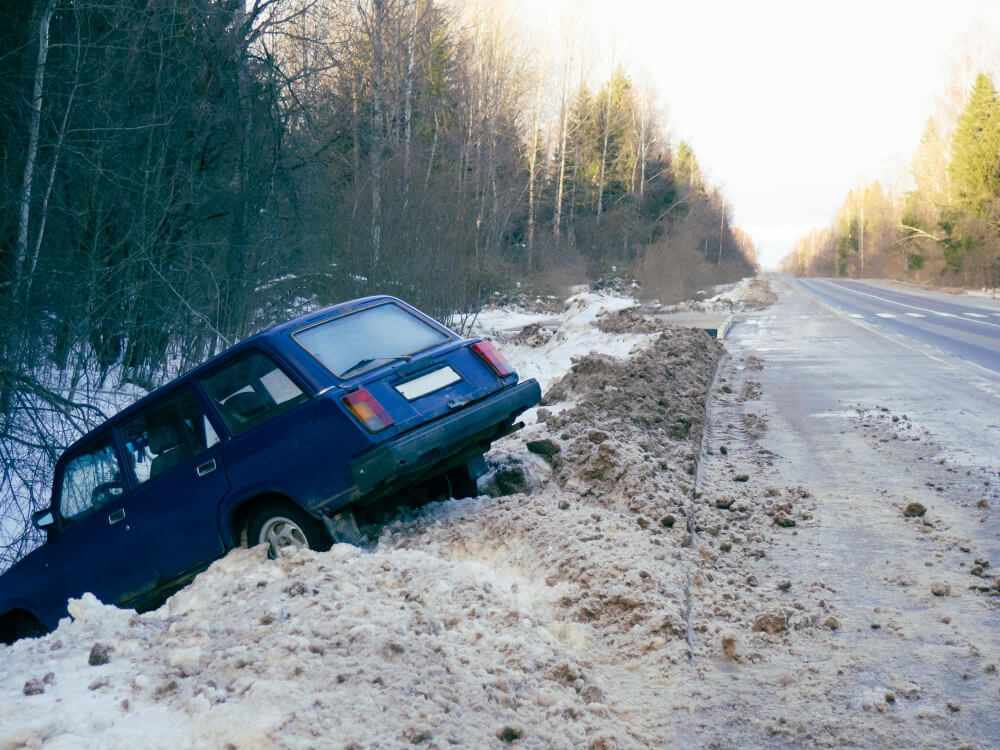
A split second of overcorrection, a rain-slicked shoulder, or a soft patch of ground you did not see coming. That is genuinely all it takes for a car to end up in a roadside ditch. One moment everything is fine, and the next you are sitting at an uncomfortable angle wondering what to do next. If you are in or around Cary, NC, Agile Towing Company is available at (919) 276-5900 to help you with off-road recovery.
This article covers why getting a car stuck in a ditch is more common than most drivers expect, why the instinct to pull it out yourself can lead to costly damage, and what the smarter approach looks like from the moment it happens. The goal here is not to sell you on anything. It is to give you genuinely useful information so you can make a better call when you are stressed, stuck, and looking for the fastest solution.
How Cars End Up in Ditches More Often Than You Think
This kind of thing does not only happen to inexperienced drivers. Attentive, careful people end up with a car stuck in a ditch every day, and the causes are often completely ordinary.
In the Triangle region of North Carolina, sudden and heavy rainfall is one of the leading contributors. Roads that seem perfectly dry can develop standing water or slick patches in minutes. Beyond weather, soft shoulders are a consistent hazard, particularly on the rural and semi-rural roads connecting Cary, Apex, Holly Springs, and Morrisville. A shoulder that looks solid can give way the moment a tire rolls onto it. Overcorrecting while avoiding a pothole, debris, or another vehicle is another frequent cause, and it happens fast enough that there is little time to respond.
The takeaway is straightforward: ending up in a ditch is not a reflection of how careful a driver you are. It can happen to anyone, and it happens regularly.
The Pull-It-Out Instinct
When a car ends up in a ditch, most people’s immediate thought is to get it out as quickly as possible. Call a friend with a truck, find a strap or a chain, and pull it free. It feels like the logical move. It is faster than waiting for help, and it seems cheaper in the moment.
That impulse is completely understandable. The problem is that what looks like a simple extraction often involves forces, angles, and vehicle components that most drivers do not have the equipment or training to handle safely.
Why DIY Ditch Recovery Often Causes More Damage
This is the part that most people do not find out until after something goes wrong. Attempting to recover a car stuck in a ditch without the right equipment or knowledge is one of the more reliable ways to turn a manageable situation into an expensive repair.
Pulling From the Wrong Attachment Points
Most passenger vehicles have tow hooks or bumper attachment points that are designed for tying the vehicle down during transport, not for the kind of force involved in pulling a stuck car out of a ditch. The direction of pull matters enormously. A ditch recovery often involves a sideways or angled force that bumpers, decorative tow hooks, and plastic rear fascia panels simply cannot handle. The result can be torn bodywork, a bent frame, or an attachment point that separates suddenly under load.
Spinning Tires in Soft or Wet Ground
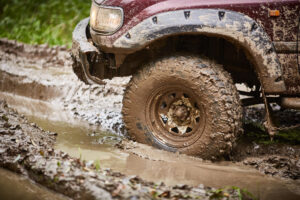
The natural instinct while someone is pulling or pushing is to press the accelerator. In soft soil or wet clay, which is common throughout the Triangle, this almost always makes things worse. Spinning tires dig the vehicle deeper into the ground, which increases the force needed for extraction. Prolonged wheel spin under load can also generate serious heat in the transmission and stress the drivetrain in ways that do not always show up immediately but create problems down the road.
The Angle of the Pull
Where the tow vehicle parks and how the strap or chain is rigged determines the angle of force on the stuck vehicle. In a real-world situation, the pulling vehicle usually ends up wherever there is space, which is often not directly in line with the path the stuck car needs to travel. Even a moderate angle mismatch places uneven stress on the suspension geometry, steering components, and axles. A tie rod or control arm can sustain damage from a single poorly angled pull without any visible sign until the car starts handling incorrectly.
Using the Wrong Recovery Equipment
Tow straps, recovery straps, chains, and bungee-style kinetic ropes are not interchangeable. Each one behaves differently under load. A standard tow strap offers no stretch, meaning the full force of the pull transfers instantly to the vehicle. If the stuck car does not move, that force has to go somewhere. Undersized equipment can snap back with serious force, which creates a genuine safety hazard for anyone nearby. Using a strap or chain that is not rated for the vehicle’s weight adds another layer of risk on top of that.
What to Do Right After Your Car Goes Into a Ditch
Getting the next few minutes right matters. Here is a clear sequence of steps to follow when a car ends up in a ditch:
- Stay in the vehicle first and assess whether it is stable before moving around inside or opening doors.
- Turn on your hazard lights immediately to alert other drivers, especially on busy roads around Raleigh or near RDU.
- Check for any smell of fuel, unusual smoke, or visible fluid pooling under the vehicle before doing anything else.
- Call for help before attempting any physical recovery. Getting the car out quickly is less important than getting it out correctly.
- Do not leave the vehicle running if there is any chance the exhaust pipe is submerged or blocked by mud or debris.
- Wait away from the flow of traffic if you exit the vehicle, and use the embankment side rather than the road side when possible.
Each of these steps is simple, but skipping any one of them creates an unnecessary risk.
Signs That Something Went Wrong During a Recovery Attempt
For drivers who have already had their car pulled out of a ditch, whether by a friend, a passerby, or their own effort, there are specific warning signs that the vehicle may have sustained damage during the extraction.
The vehicle pulling noticeably to one side while driving straight is one of the clearest indicators of steering or suspension damage. Unusual noises during acceleration, particularly from the drivetrain, suggest the transmission or axle components took stress during the recovery. Visible gaps between body panels that were not there before, dashboard warning lights that appeared after the event, or a steering wheel that no longer sits centered are all reasons to have the vehicle inspected by a mechanic before driving it any significant distance.
When Professional Off-Road Recovery Is the Right Call
There are situations where calling a professional recovery service is genuinely the better first option rather than the last resort. When the vehicle is deeply embedded in soft ground, when it has gone into a ditch on a high-traffic road, when there is already visible damage, or when the terrain makes a DIY attempt genuinely hazardous, professional equipment and experience make a real difference in both safety and outcome.
Agile Towing Company serves drivers throughout Cary, Raleigh, Apex, Holly Springs, Morrisville, and the broader Triangle region. Reach us at (919) 276-5900 any time you need professional recovery support.
The Takeaway
A car stuck in a ditch is stressful, and the urge to solve it fast is completely natural. But fast and correct are not always the same thing. Pulling from the wrong point, spinning tires deeper into soft ground, using undersized equipment, or rigging the pull at a bad angle can each create damage that costs significantly more to fix than a professional recovery would have. Knowing what is actually at risk when you attempt a DIY extraction helps you make a more informed decision in the moment, and that is really the point. When in doubt, waiting a few minutes for the right help is almost always the better call.